In summary: Google Shopping displays your products with a photo, price, and name precisely when someone is looking to buy what you sell. For an online store, it's the channel that converts best because the customer arrives already decided. The key isn't to bid more, but to have a clean product catalogue and optimise it daily: prices, titles, images, and budget where it truly sells. This repetitive work is done for you by an AI platform that optimises 24/7, for a fraction of an agency's cost and with measurable results.
What Google Shopping is and why it converts so well
Google Shopping is the Google ad format that displays your products with their image, name, and price directly in search results. When someone searches for 'running shoes size 42' or '6-cup Italian coffee maker', listings with a photo and price appear at the top: that's Shopping. The customer sees the product before clicking, so anyone who enters your store already knows what they'll find and how much it costs.
For an online store, this is the key difference compared to a regular text ad. In a text ad, you convince with words; in Shopping, you convince with the product itself. The result is that clicks are much more qualified: the person has seen the photo, seen the price, and still decided to click. They are closer to buying. That's why, for most e-commerce businesses, Shopping is usually the paid channel that offers the best profitability.
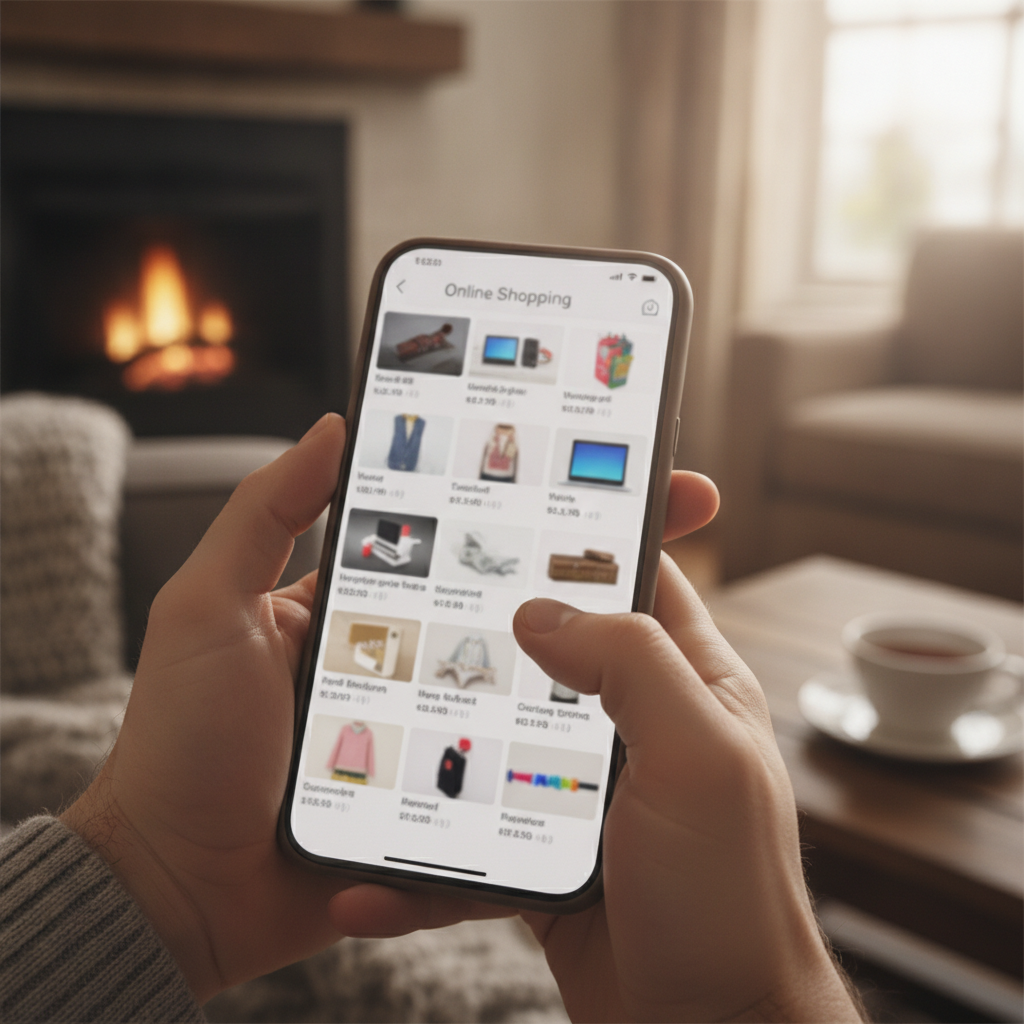
And there's an added advantage many SMEs are unaware of: your store's products can also appear on Google's Shopping tab for free, without paying per click. Paid ads give you the best positions and control over spending, but having a well-structured catalogue also opens up that organic visibility at no cost. It all starts with the same thing: a well-prepared product catalogue.
How it works: the product catalogue is the engine
Here's the big mindset shift compared to traditional advertising. In Google Shopping, you don't choose keywords for each ad. What you do is send Google a catalogue with all your products and their data — name, description, price, image, availability, brand — and Google decides which product to display for each search based on that information. This catalogue is technically called a 'product feed', and it's the real engine of everything.
The practical consequence is enormous: the quality of your catalogue determines your success. If a product title is well-written, with the brand, model, and characteristics people actually search for, Google will display it in the correct searches. If the title is poor or generic, your product won't appear where it should, no matter how much budget you allocate. The same goes for images: a clean photo on a white background performs better than a cropped one or one with watermarks.
This catalogue isn't something you prepare once and forget about. Prices change, stock runs out and is replenished, new products come in, seasonal ones go out. An outdated feed means you're advertising products out of stock or with old prices, which skyrockets abandonment rates and causes Google to penalise your account. The official documentation from Google insists that catalogue data be complete and up-to-date to perform well. Maintaining it this way, product by product, is constant and systematic work: precisely the kind of task that exhausts a manager and, when well-managed, makes the difference between selling and burning through budget.
How much Google Shopping costs for an online store
The honest answer is: whatever you decide. There's no fixed entry price or commitment. You set a daily budget, and Google won't exceed it; you only pay when someone clicks on your product, not for displaying it. The cost per click depends on your sector, the competition for those products, and how well-optimised your catalogue is. Selling something highly in-demand and competitive costs more per click than a quiet niche.
But in e-commerce, the cost per click matters less than it seems. What truly determines if Shopping is worthwhile for you is profitability: for every euro invested in ads, how much comes back in sales. A well-structured campaign can be profitable with modest budgets focused on your star products; a poorly structured one burns money even if you invest a lot, because it spreads the budget across products that don't sell or have low margins.
The realistic advice for getting started: don't blindly launch your entire catalogue with the same budget. Identify your most profitable and fast-moving products, concentrate spending on them, measure what truly sells, and only scale what works. The most expensive mistake isn't spending too little or too much, but not measuring which product brings sales and which only consumes budget. With data in hand, the decision is simple; without data, it's a bottomless pit.
Common mistakes that sink a Shopping campaign
Most stores that try Shopping and conclude 'it doesn't work' fell into avoidable mistakes. These are the most frequent:
- Poor product titles: calling a product 'Model 4521' instead of 'Asics Gel running shoes size 42 men' means Google doesn't know which searches to display it for. The title is the first thing to take care of.
- Outdated feed: advertising products out of stock or with prices that are no longer accurate skyrockets abandonment rates and harms the entire account. The catalogue must reflect the store in real-time.
- Low-quality images: dark, cropped photos or those with logos and text overlaid perform worse, and sometimes Google rejects them. Clean background and clear product.
- Same budget for the entire catalogue: spending equally on a high-selling product and one that barely moves is throwing money away. The budget should go where the profitability is.
- Set it and forget it: Shopping isn't 'switch on and go'. Competitor prices change, stock varies, some products become fashionable, and others stop selling. Without weekly adjustments, the campaign deteriorates on its own.
Almost all these failures have something in common: they demand continuous attention and measurement discipline across dozens or hundreds of products simultaneously. This is precisely what a store manager lacks the time to do well each week. That's where the traditional model shows its weaknesses.
Google Shopping within your sales strategy
Google Shopping shines when someone is already actively searching for a product like yours: it captures existing demand that's ready to buy. It's your channel for the final part of the journey, when the customer almost has their card in hand. But it's not the only channel, and it's wise to know when to combine it with others.
Social media, for example, serves to awaken desire in people who weren't yet looking for your product: they educate, inspire, build brand. Organic Google ranking attracts medium-term traffic at no cost per click. Each channel serves a different function, and the ideal mix for a store is usually to capture immediate sales with Shopping while, in parallel, building presence with content and social media for the medium term.

The important thing is not to spread your budget too thin and to measure each channel separately, to know which truly brings you sales and which only costs money. A store that knows exactly which channel and product performs for them is a store that grows judiciously, not based on intuition. And that's only achieved by continuous measurement, not by reviewing a report every few weeks.
Agency, freelancer, or an AI platform: what's right for you?
This is where many stores get stuck. Managing Google Shopping well is continuous and meticulous work: keeping the catalogue up-to-date, improving product titles, monitoring prices against competitors, reallocating budget towards what sells, pausing what doesn't perform. This repetitive, constant, and large-scale nature is precisely the weak point of the traditional model.
An agency or a freelancer charges you for human hours. These hours are limited, depend on someone's availability, stop during holidays, and become more expensive as soon as your catalogue grows or you want faster reaction times. You pay a lot for work that, for the most part, is systematic and repeatable across hundreds of products — and often that daily optimisation doesn't happen, because one person can't review your entire catalogue around the clock. When you stop paying, everything stops.
The model changes completely with an AI platform that works 24/7. Instead of hiring human hours, you activate an agent that continuously monitors your catalogue, improves product titles, adjusts bids, detects which products sell and which only consume budget, and reallocates the budget towards profitability, without breaks or bottlenecks. It does the heavy, systematic work for you; you maintain control and validate the strategy, and the cost is a fraction of hiring a team. Most importantly: everything is measured, so you know exactly which product is performing instead of relying on an opaque monthly report.
It's not about a 'cheap agency': it's a distinct and superior model for work that, by nature, demands constant monitoring and adjustment across many products simultaneously. AI doesn't replace your business judgment — it amplifies it — and eliminates the dependency on someone having time this week to optimise your store. We are not an agency; we are an AI agent platform.
How to get started today without being an advertising expert.
You don't need to master Google Shopping to get the most out of it. The most expensive mistake is not starting due to fear of the technical side, when today most of that work can be delegated to a system that does it for you. These are the realistic first steps for an online store:
- Prepare your catalogue with clear and complete product titles — brand, model, key feature — and clean images on a white background.
- Ensure prices and availability reflect your store in real-time, so you don't advertise what you don't have.
- Identify your most profitable and fast-moving products: that's where the bulk of your budget should go.
- Set a daily budget you can sustain during the first few weeks of learning.
- Measure every sale and adjust: reinforce products that bring in revenue, pause those that only consume budget.
All of this is exactly what BOO Performance does for you: Boomatik's advertising agent continuously prepares and optimises your Google Shopping campaigns, improves product titles, adjusts bids, detects what sells, and shows you measurable results, operating 24/7 without you having to hire anyone or become an expert. You can see it in action and activate it from the BOO Performance page..
Profitable Advertising on Google and Meta, Managed by AI 24/7.
Discover it →Frequently Asked Questions
What's the difference between Google Shopping and a regular text ad?
A text ad convinces with words and links to a page; Google Shopping directly displays the product with a photo, name, and price before the click. For an online store, that means much more qualified clicks: whoever clicks has already seen what's and how much it costs, so they arrive closer to buying. That's why Shopping is usually the paid channel with the best profitability for an e-commerce business.
Do I need the perfect product catalogue to get started?
Not perfect, but organised. The catalogue is the engine of Shopping: Google decides which product to display based on the data you send it. With clear titles, clean images, and updated prices and stock, you can start selling. From there, continuous optimisation — improving titles, maintaining the feed — is what refines the results over time.
How much does Google Shopping cost for a small store?
Whatever you decide: you set a daily budget, and Google won't exceed it, and you only pay per click. The sensible approach is to concentrate spending on your most profitable products, measure what truly sells, and only scale what works. Profitability — how much comes back for every euro — matters much more than the price of each click.
Can I appear on Google Shopping for free?
Yes. In addition to paid ads, products with a well-structured catalogue can appear organically on Google's Shopping tab, with no cost per click. Paid ads give you the best positions and control over spending, but preparing your catalogue properly also opens up that free visibility. It all stems from the same effort: a clean and updated product feed.
Do I need an agency to manage my Shopping campaigns?
It's not essential. An agency sells you human hours: these are limited, become more expensive as your catalogue grows, and depend on their availability, often without the daily optimisation that hundreds of products require. An AI platform works continuously, maintains your catalogue, and adjusts campaigns for a fraction of the cost, providing full measurement. It's not just a cheaper agency; it's a different model designed for work that demands constant, large-scale monitoring.
