In summary: Google Ads for small business is the fastest way to appear at the top when a customer is actively searching for what you sell, and you only pay when they click. Set up correctly, it attracts customers from day one; set up poorly, it burns through budget without sales. You don't need an expensive agency or to be an expert: you need to focus your keywords well, measure every pound, and continuously adjust. An AI platform that optimises your campaigns 24/7 does that repetitive work for you, at a fraction of the cost and with measurable results.
What is Google Ads and Why It Matters to a Small Business
Google Ads is Google's advertising system. It allows you to appear at the top of search results — and on YouTube, Gmail, or partner websites — precisely when someone is searching for what you offer. The key for a small business is simple: you only pay when someone clicks on your ad, not for displaying it. In other words, you pay for people who have already expressed interest in your product or service.
Compared to organic search ranking, which takes months to build, Google Ads provides visibility from day one. You launch a campaign in the morning, and by the afternoon, you could have your first potential customer visits. For a business that needs to sell now — a new shop opening, a service with availability, a time-sensitive promotion — that immediacy is incredibly valuable.
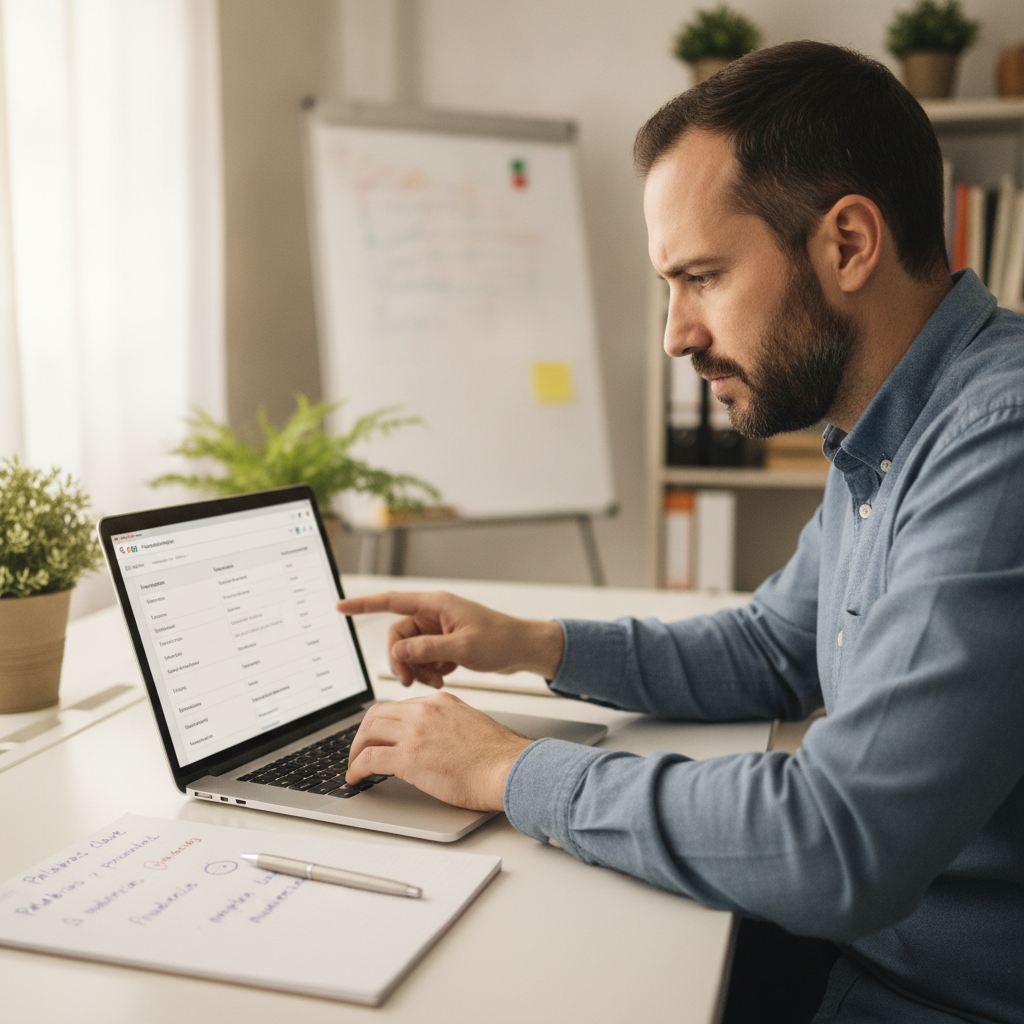
The other major advantage is control. You decide how much you spend per day, who you want to reach, in which area, and with what message. You can start with a modest budget, see what works, and only scale up what delivers results. There are no platform lock-in contracts or huge minimums: the barrier to entry is low, and that's where a small business can compete head-to-head with much larger businesses.
How the Auction Works (No Jargon)
Behind every search is an instant auction. When someone types something into Google, the platform decides in milliseconds which ads to show and in what order. And here's the important part: the highest bidder doesn't always win. Google combines two things to determine your position.
- What you're willing to pay: the maximum you bid for a click on a specific search.
- The quality of your ad: if your ad copy matches what the person is searching for and your landing page responds well to that search, Google rewards you. A relevant ad can appear above one that pays more but is generic.
This is excellent news for small businesses. It means that with well-focused ads and a clear page, you can outperform competitors with larger budgets simply by being more relevant. The official documentation from Google insists on the same point: the better you respond to the user's intent, the better your performance. The goal isn't to bid higher, but to be the most accurate answer to what the customer is looking for.
How Much Does Google Ads Cost for a Small Business?
The million-dollar question. The honest answer is: whatever you decide. There's no fixed entry price; you set a daily budget, and Google won't exceed it. The actual cost depends on your industry, the competition for those searches, and how well your campaign is set up. A click in a highly competitive sector costs more than in a quiet niche.
What truly matters isn't how much you spend, but how much you get back. This is where the concept of profitability comes in: for every pound invested in ads, how much returns in sales. A well-focused campaign can be profitable with modest budgets; a poorly set up one burns money even if you invest a lot. That's why the most expensive mistake isn't spending too little or too much, but not measuring.
Realistic advice for getting started: begin with a budget you can afford to lose during the initial learning weeks, concentrate that money on a few very specific searches with clear purchase intent, and don't spread it across dozens of generic terms. It's better to dominate three profitable searches than to appear weakly in thirty. With data in hand, you scale what works and turn off what doesn't.
Common Mistakes That Burn Through Budget
Most small businesses that try Google Ads and conclude 'it doesn't work' actually fell victim to avoidable mistakes. These are the most frequent:
- Too broad keywords: bidding on generic terms attracts clicks from people who aren't going to buy. 'Shoes' brings browsers; 'handmade dress shoes in Madrid' brings customers.
- Sending clicks to the homepage: if the ad promises something specific, the landing page must speak exactly to that. Sending to a generic homepage drastically increases bounce rates.
- Not measuring conversions: if you don't know which searches generate calls, forms, or sales, you're spending blindly. Without measurement, optimisation isn't possible.
- Set it and forget it: Google Ads isn't a 'switch on and go' solution. It requires constant adjustments — which searches add value, which to discard, which ad converts best — week after week.
- Ignoring mobile: a significant portion of searches are done from phones. If your website is slow to load or displays poorly on a small screen, you pay for the click but lose the customer.
Almost all these failures have something in common: they demand continuous attention and measurement discipline, precisely what a busy manager lacks the time to do well each week. That's where the traditional model shows its limitations.
Google Ads within Your Acquisition Strategy
Google Ads shines when someone is already actively searching for what you offer: it captures existing demand. But it's not the only channel, and it's wise to know when to combine it. Social media, for example, serves to spark interest in people who weren't yet looking for you. Each channel fulfils a distinct function within the customer journey.
If you're torn between investing in search or social, we elaborate in the comparison between Meta Ads and Google Ads, where we explain what fits best depending on your business type. And if you're already clear that you want search but are held back by the technical side, we have a step-by-step guide on how to automate Google Ads with AI without becoming an expert.
For an SME, the ideal combination is usually to capture immediate demand with Google Ads and, in parallel, build a presence with content and social media for the medium term. The important thing is not to spread your budget too thin and to measure each channel separately to know which one truly brings you customers.

Agency, freelancer, or an AI platform: what's right for you?
This is where many SMEs get stuck. Managing Google Ads well is continuous work: reviewing searches every few days, adjusting bids, pausing underperforming ads, testing new ones, monitoring spend. This repetitive and constant nature is precisely the weak point of the traditional model.
An agency or a freelancer charges you for human hours. These hours are limited, depend on someone's availability, stop during holidays, and become more expensive as soon as you want more volume or a quicker reaction time. You pay a lot for work that is largely systematic and repeatable — and often that daily optimisation doesn't happen, because a person can't monitor your campaigns around the clock. When you stop paying, everything stops.
The model changes completely with an AI platform that works 24/7. Instead of hiring human hours, you activate an agent that continuously analyses your campaigns, adjusts bids, discards non-converting searches, tests ads, and reallocates the budget towards what works, without breaks or bottlenecks. It does the heavy, systematic lifting for you, you maintain control and validate the strategy, and the cost is a fraction of hiring a team. Most importantly: everything is measured, so you know exactly what'swhat's working instead of relying on an opaque monthly report.
This isn't about a 'cheap agency'; it's a distinct and superior model for work that, by its nature, demands constant monitoring and adjustment. AI doesn't replace your business judgment — it amplifies it — and eliminates the reliance on someone having time this week to optimise your investment. We thoroughly compare both approaches in the article on advertising agency versus 24/7 AI..
How to get started today without being an advertising expert.
You don't need to master Google Ads to benefit from it. The most expensive mistake is not starting due to fear of the technical side, when most of that work can now be delegated to a system that does it for you. Here are the realistic first steps for an SME:
- Be clear about the action you want to trigger: a call, a form submission, a booking, or a sale. That's your goal.
- Make a short list of searches with clear purchase intent for which you want to appear.
- Prepare a landing page that responds exactly to what the ad promises, is fast, and looks good on mobile.
- Set a daily budget you can afford during the learning period.
- Measure each conversion and adjust: reinforce what brings customers, switch off what only spends.
All of this is exactly what BOO Performance does for you: Boomatik's advertising agent continuously launches and optimises your Google Ads campaigns, adjusts bids, discards non-converting elements, and shows you measurable results, working 24/7 without you having to hire anyone or become an expert. You can see it in action and activate it from the BOO Performance page..
Profitable Advertising on Google and Meta, Managed by AI 24/7.
Discover it →Frequently Asked Questions
How much money do I need to start with Google Ads?
There's no mandatory minimum: you set the daily budget, and Google won't exceed it. The sensible approach is to start with an amount you can afford during the first few weeks of learning, focus it on a few searches with clear purchase intent, and only scale what proves to be profitable. Measuring well is more important than spending a lot.
Does Google Ads work for small businesses or just large ones?
It works particularly well for SMEs. Since Google rewards relevance and not just budget, a small, well-focused business can outperform much larger competitors in specific searches for its area or niche. The key is specificity, not size.
How long does Google Ads take to show results?
Unlike organic search, Google Ads provides visibility from day one. The first visits arrive within hours. Optimising profitability is another matter: that requires a few weeks of learning and continuous adjustment to discard what doesn't convert and reinforce what does.
Do I need an agency to manage my campaigns?
It's not essential. An agency sells you human hours: these are limited, become more expensive as you grow, depend on their availability, and often lack the daily optimisation these campaigns require. An AI platform works continuously, adjusts campaigns for a fraction of the cost, and provides full measurement. It's not a cheaper agency; it's a different model designed for work that demands constant vigilance.
Is Google Ads or social media better for my SME?
They serve different functions. Google Ads captures those already searching for what you sell; social media sparks interest in those who weren't yet looking for you. For many SMEs, the ideal is to combine both, but by measuring each channel separately to know which truly brings customers and allocate the budget wisely.
