In summary: A chatbot from support platform is an automated assistant that instantly answers your customers' queries, at any time, and via their preferred channel. With artificial intelligence, it's no longer a rigid menu of options and understands naturally written questions. For an SME, this means always being available, without expanding your team or paying for night shifts, at a cost that's a fraction of hiring staff.
What is a customer service chatbot?
A customer service chatbot is a program that converses with people contacting your business and automatically resolves their queries, without an employee needing to be present. It appears as a chat window on your website, within WhatsApp, or on your social media profile, and answers questions in seconds about things like opening hours, order status, product availability, or how to book an appointment.
The difference from traditional phone menus — 'press 1 for sales, press 2 for issues' — is that today's chatbots understand natural language. A customer types 'my order that arrived yesterday is broken', and the assistant comprehends the intent, finds relevant information, and offers a solution or opens a ticket. The person doesn't need to guess the exact word or navigate endless option trees.
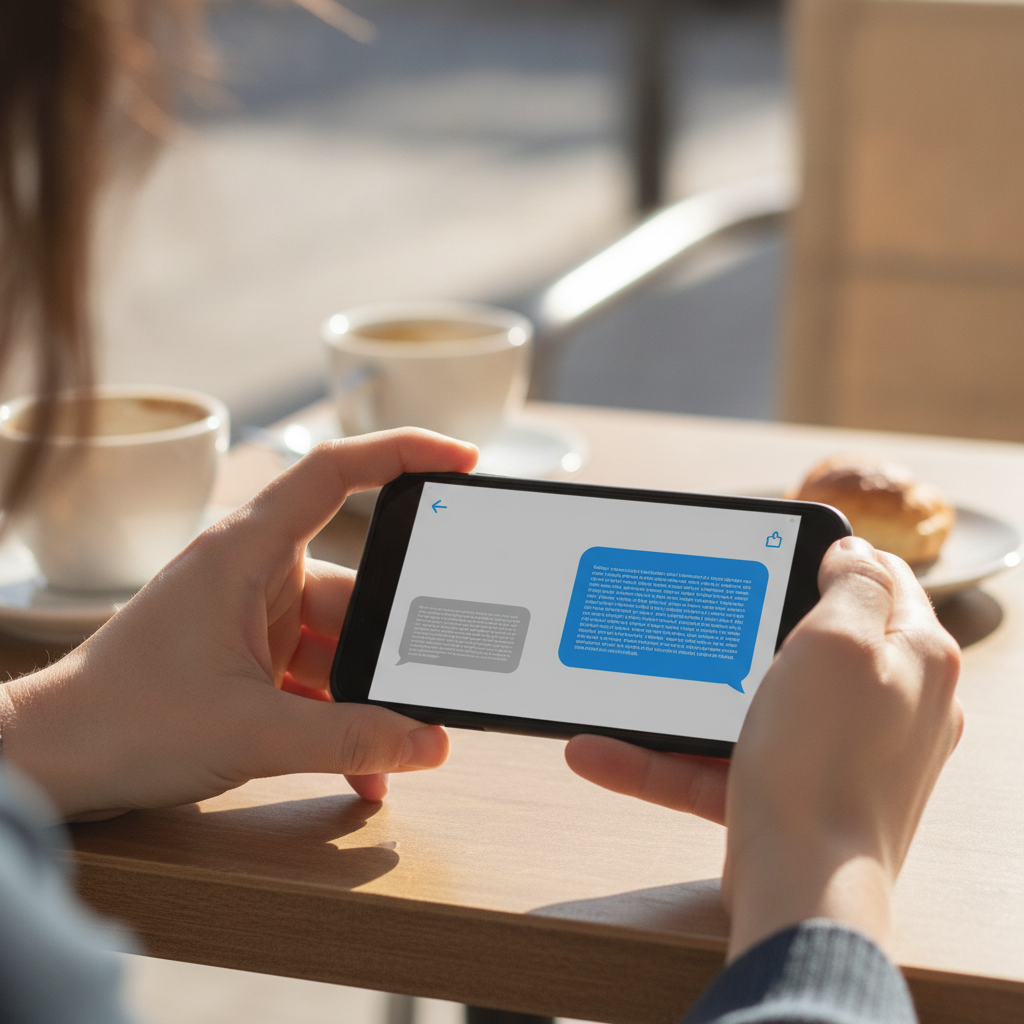
For an SME manager, the key idea is simple: the chatbot handles the repetitive and predictable aspects of customer service — which is usually the majority of the volume — allowing your team to dedicate their time to cases that truly require human judgment.
Classic Chatbot vs. AI Chatbot
Not all chatbots are created equal, and this distinction explains why many businesses tried one years ago, had a bad experience, and then dismissed them.
The classic chatbot, also known as a rule-based or button-driven chatbot, operates with a closed script. It can only respond to what's pre-written, and as soon as the customer phrases the question differently, it gets lost and replies with the typical 'I didn't understand your query'. It's useful for very limited questions but frustrates the user as soon as the conversation goes off-script.
The chatbot with artificial intelligence is a different beast entirely. It relies on language models that understand what a person means, even if they express it differently, with typos, or using colloquialisms. It can read your catalogue, FAQs, or knowledge base and respond with that information, not a rigid script. Furthermore, it maintains the conversation's context: if a customer asks 'and how long does it take?' after discussing a product, it understands they're referring to that product's delivery time.
This ability to reason about context is what separates current assistants from the automations of a few years ago. If you want to delve deeper into how these autonomous systems work, we explain it in detail in our guide on AI agents for small business.
What it can truly solve for an SME
Let's be realistic: a chatbot won't replace your entire customer service department, but it will absorb the majority of the daily volume of queries. Here are the situations where it adds value from day one.
- Repeated questions. Opening hours, location, payment methods, return policy, or whether you ship to a specific area. These are queries answered dozens of times a week, which the chatbot handles effortlessly.
- Order and appointment status. Connected to your system, the assistant checks an order's location or confirms a booking without anyone lifting a finger.
- Lead capture. When someone asks for a quote outside of business hours, the chatbot collects their details and requirements so your team can call them the next day with all the information. This links directly to lead generation.
- First-line issue filtering. It gathers basic problem details and classifies urgency before passing the case to a person, who then arrives with the context already established.
- Smart handover. When a query is beyond its scope, it alerts and transfers the conversation to a human without the customer having to repeat everything.
The practical rule is clear: the more predictable and repetitive a query, the better the chatbot resolves it; the more exceptional or delicate, the more advisable it is for a person to handle it, with the groundwork already prepared.
Why it's better than expanding your team
When an SME is overwhelmed with queries, the instinctive reaction is to hire more staff or outsource the service to an external agency. This is a valid route, but it's expensive and limited: one person serves one customer at a time, works set hours, and takes weekends, holidays, and annual leave. To cover nights or peak times, you have to pay for overtime or expand your workforce, and the cost increases every month.
A customer service chatbot breaks that model. It works twenty-four hours a day, every day of the year, and serves dozens of people simultaneously without the quality of response dropping when a flood of queries arrives. It doesn't get tired, doesn't make mistakes due to haste at three in the morning, and doesn't leave for another company taking business knowledge with it.
The profitability comparison is qualitatively compelling: where an agency or an employee represents a recurring fixed cost that increases with volume, an automated assistant has a cost that is a fraction of that and barely changes whether it handles ten queries or a thousand. Furthermore, the results are measurable: you can see how many queries it resolves independently, how many it escalates, and how much of your team's time it frees up each week.

The goal isn't to do away with people, but to place them where they truly add value. Let your team stop answering 'What time do you close?' a hundred times and instead focus on closing sales and looking after customers who need human interaction. This logic, where AI covers the repetitive tasks while people add value, is the same we apply to all marketing automation for small business.
How to implement a chatbot step-by-step
Setting up a chatbot doesn't require an IT department. With an organised approach, an SME can have it up and running in no time. Here are the steps.
- Identify your top questions. Review this with whoever currently answers the phone or emails: there are bound to be ten or fifteen queries that come up constantly. These are the ones your chatbot should master first.
- Gather your information. Opening hours, catalogue, reference prices, shipping conditions, return policy. The clearer and more complete this foundation, the better the responses will be.
- Choose your primary channel. Decide where your customers contact you most: your website, WhatsApp, Instagram, or your Google Business Profile. Start there and add other channels later.
- Define when a human intervenes. Set the boundaries: serious complaints, complex sales, or upset customers should be passed to a person with a clear alert.
- Test with real-life scenarios. Before going live, throw the actual questions you receive at it and correct any weak responses. Half an hour of testing avoids many misunderstandings.
- Measure and adjust. Once it's live, review what it couldn't answer and add that information. A chatbot improves every week if you give it a little attention.
If you also manage reviews and your business listing's reputation, it's worth coordinating the chatbot with that aspect; we elaborate on this in the guide to Google Business reviews with AI,. And for the general framework of your local presence, the official reference is the Google Business Profile help centre.
Common mistakes when setting up a chatbot
Most bad experiences with chatbots don't stem from the technology itself, but from how it's implemented. Here are the most common pitfalls and how to avoid them.
- Hiding the human handover. A chatbot that traps customers in a dead-end loop generates frustration. It must always offer a clear path to speak with a person.
- Expecting it to know everything. It's better for it to master ten topics well than to respond poorly to fifty. Start small and expand.
- Forgetting about it after installation. A chatbot that no one reviews becomes outdated. It needs regular updates with new business information.
- A tone that isn't yours. If your business is friendly and the chatbot sounds like a technical manual, it will jar. It needs to speak with your brand's voice.
- Not measuring anything. Without data on what it resolves and what it fails at, improvement is impossible. Measurement is what turns a mediocre chatbot into one that truly saves time.
By avoiding these mistakes, the customer experience improves rather than worsens, which is ultimately the goal: that anyone who contacts your business leaves with their query resolved and a positive feeling.
Get and respond to your Google reviews automatically with AI.
Discover it →Frequently Asked Questions
Does a customer service chatbot replace my team?
No. It absorbs repetitive and predictable queries, which make up the majority of the volume, and frees up your team for cases that require human judgment: complex sales, complaints, or customers who need personal interaction. The goal is to place people where they add the most value, not to eliminate them.
Do I need technical knowledge to set it up?
No. Current platforms are designed so that the manager themselves can configure the chatbot without programming. It's enough to gather the usual business information (opening hours, catalogue, conditions) and define when a person should intervene. The technical side is handled behind the scenes.
Which channels can it serve?
The ones your customers use: your website, WhatsApp, Instagram, Facebook, or your Google Business Profile. It's advisable to start with the channel where you receive the most messages and add others once the first one is working well.
How long does it take to become operational?
It depends on the scope, but a chatbot focused on frequently asked questions can be operational in a matter of days. The important thing isn't to launch it perfectly, but to get it running with the essentials and improve it each week with what it learns from real conversations.
Does the chatbot understand Spanish and my business's tone well?
Yes. AI-powered chatbots understand natural language, including colloquialisms and typos, and can be adjusted to respond with your brand's voice, whether that's more friendly or more formal, depending on your audience.
Serve your customers 24/7 without expanding your team
BOO MyBusiness puts a customer service assistant to work for your SME from day one, for a fraction of the cost of hiring.
DISCOVER BOO MYBUSINESS